Hike prep for the Dolomites
Hiking the Italian Dolomites
I’m Jenny, Susie’s little sis’, and I am excited to contribute my adventures to her website. In August 2025, my partner Steve and I set out on to conquer the Alta Via 1 hike in the Dolomites, Italy. Did we make it? Almost!
The Dolomites are an extensive mountain range in north-east Italy, and are a UNESCO World Heritage site. The Alta Via 1 (AV1), is one of the most popular long distance hiking trails in the Dolomites, about 120km long. We decided to go self-guided, staying in “rifugios” along the way. Rifugios are “refuges” which for the most part are like hotels or hostels with dormitories. Many of them are very nice and have private rooms as well. They provide accommodation, food, facilities and essentials for hikers.
I made all the bookings directly. I worked out the route we should take and the rifugios we should stay in, and started contacting them 12 months in advance to make the bookings. I was keen to get the private rooms wherever available, and these book out fast. I managed to get a private room at 5 out of 8 rifugios. A couple of rifugios weren’t taking bookings that far in advance but I stayed in contact and booked as soon as I could.
We entered Italy via a bus (Flixbus) from Ljubljana to Venice and stayed one night in Mestre (just outside Venice) then one night in Cortina de Ampezzo before starting our hike.
Some super-keen and fit people do this trail in 5 or 6 days, whilst those who like a leisurely hike might take 12 days. We planned to do the hike over 9 days, but in the end we hiked for 8 days, cutting our hike slightly short (more about this on the Day 7 blog). Still, we walked a challenging 110km over 8 days.
Navigation
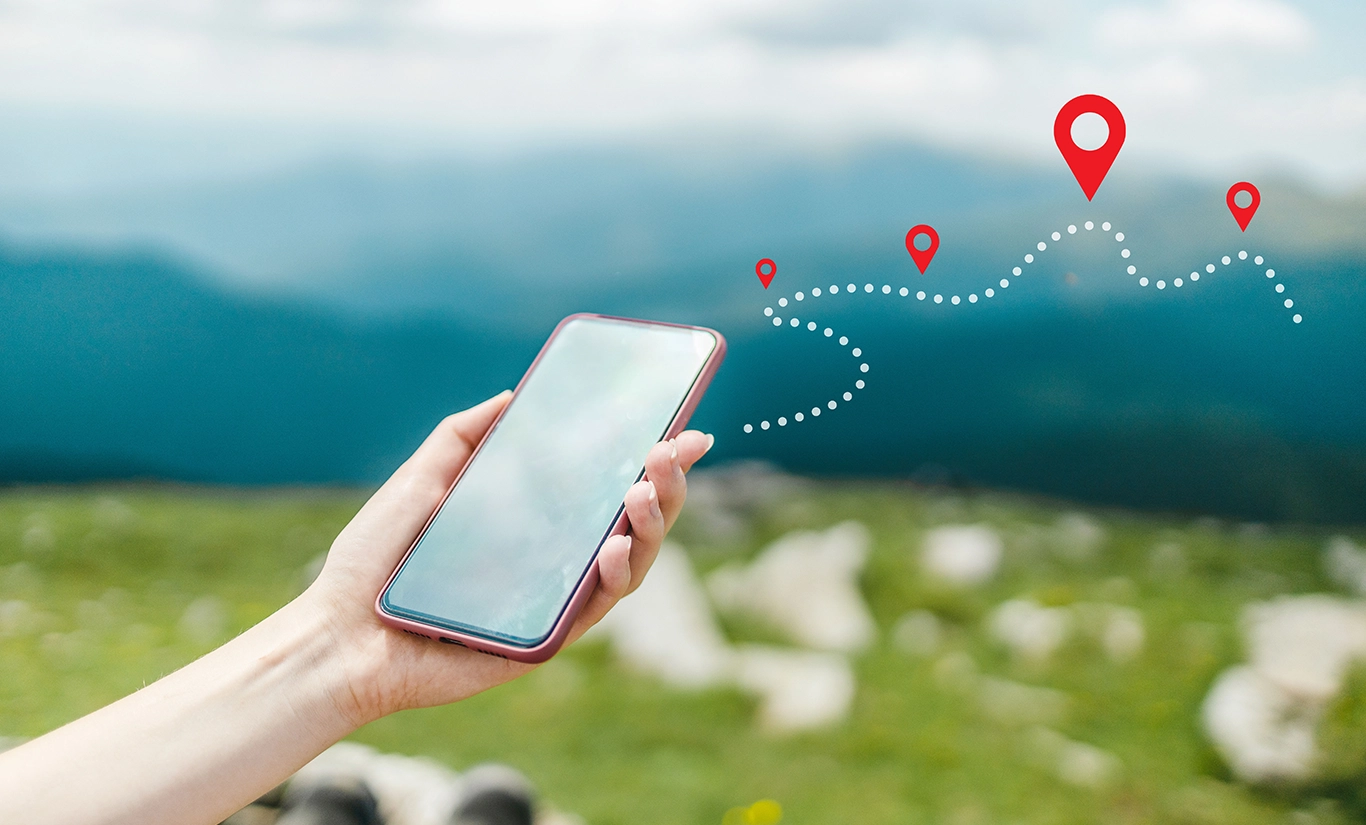
To navigate, I purchased an app from The Hiking Club. Their app is used on a computer, and you can play around with entering different start and finish points each day, with the app calculating the distance, time, and giving you key statistics such as elevation. When you’ve decided on your route, you download the map files and upload them to a separate navigation app. I used Organic Maps (which is recommended by the Hiking Club). I am not particularly tech savvy and even I managed to do it.
Steve uploaded the same map files to his Garmin and could see the trail in his Garmin watch which alerted him if he went off track. Steve tends to plough along oblivious to trail markers or turn-offs, so I was comfortable to let Steve walk on ahead of me at his own pace, knowing that he would get an alert if he went the wrong way. He did spend a lot of time waiting for me over the next few days.
The Hiking Club’s app is brilliant, it was money well spent! The app highlights your trail and has an arrow for your location and direction. Internet is not needed. The Hiking Club app also shows alternative routes, where water is available, and other transport options such as cable cars.
I wish I had purchased this helpful app during the planning phase, because I was very confused by the mind boggling information I was finding on different people’s websites. There are many websites that give you a list “all” the rifugios, but they actually don’t list them all – only the ones they used. I didn’t realise how many rifugios there are until I purchase the Hiking Club app, which does have them all. Unfortunately for me, I had already locked in my route by the time I purchased the app. Nonetheless, the app validated my route and gave me a brilliant way to navigate. I also had a great 1:1 chat with a trail expert from the Hiking Club. The app is linked to many of the rifugios so you can see live availability and make bookings. I will definitely purchase the same app for Tour Mont Blanc when the time comes.
Gear
We passed through Venice on our way to the Dolomites and again on the way out of Italy, so we left the majority of our luggage in Mestre for 10 nights (we had one night in Cortina prior to the planned 8 nights on the trail then one night afterwards in Ponte Nelle Alpi). We went from there with our hiking packs only. Like most hotels in Mestre, our hotel provided free luggage storage.
Steve carried a 44 litre Osprey Talon backpack and I carried a 26 litre Osprey Sirrius. An advantage of hiking with my bloke was that he could carry some shared items such as our medical kit and lunch on the days we had a packed lunch. I found the 26 litre pack about right; I wouldn’t have wanted to carry anything larger (and therefore heavier). Each of our packs weighed about 8kg without water…I pack a tight bag whereas Steve tends to pack loosely.
Some of the rifugios had a laundry service, which I used wherever possible. Laundry was expensive (20 to 30 euros to wash and dry) but this did allow me to hike with minimal clothes and not feel like an absolute grub. The laundry services provided laundry powder. In a couple of places it is not possible to do any laundry as there are shared facilities and a limited water supply.
The weather is variable, one day you could be sweating it out in shorts and t-shirts and the next you’ll need layers and wet weather gear. Or, sometimes even on the same day! Layers are key, and useful for giving you more options of things to wear.
I took my Crocs to wear in the showers when there were shared facilities, as I’m not a fan of putting my naked soles onto a wet floor that has been under many festy feet. They were also handy for wearing around the rifugios in the evening (with warm socks – so fashionable). These were my only shoes other than my hiking boots, Merrell Rogues. The Rogues were a great choice, nice thick soles and good ankle support.
I would highly recommend bringing a metal S-hook or 2. They take up hardly any space, and are brilliant for hanging your backpack and other gear from your bunk when you are staying in a cramped dorm room. Some dorms have minimal space so you have to kind of squoosh your stuff in and around your bunk. It’s great to use a hook to hang things on the bunk or from a window or whatever is available. If you’ve ever used a good hiking pack, you’ll know they don’t stand up very well, so the S-hook is great for hanging it in hotels too.
My Gear List
- Hiking boots
- 2 x hiking trousers
- t-shirts x 2
- undies x 5
- night bralette
- crocs for shared showers
- socks x 3
- rain jacket
- rain pants
- jacket/jumper
- sun hat
- sun gloves
- sports bra
- sun top/sleeves
- thermal leggings and skivvy
- merino top
- beanie and gloves
- light scarf (I took the Every by Everysew)
- s-hook for hanging backpack
- light towel
- water bladder
- water bottle with Life Straw (filter)
- sleep sheet
- hiking poles
- waterproof backpack cover
- power bank
- hanky or 2
- snacks – protein bars
- phone
- chargers and adapters
- sunnies
- plastic bags
- plastic ball for hip therapy
- athletes foot cream (preventative!)
- face and hand moisturiser
- soap
- toothbrush
- toothpaste
- sunscreen – face
- sunscreen – body
- nail scissors
- deodorant
- wet wipes
- lip stuff
- sanitiser
- laundry sheets
- medical kit incl blister treatment